
Call us now :08045802007
 Send Inquiry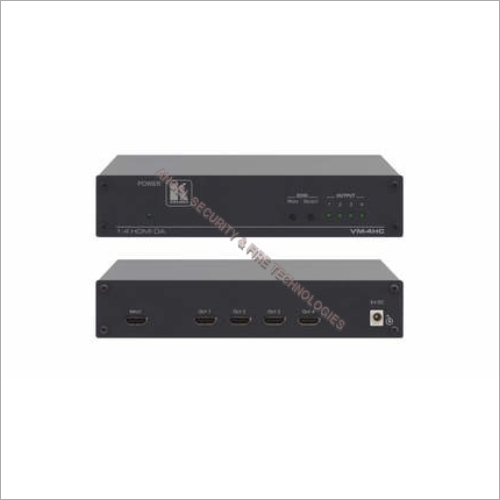
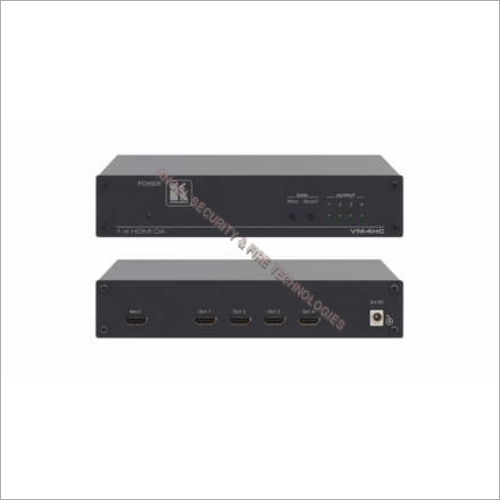
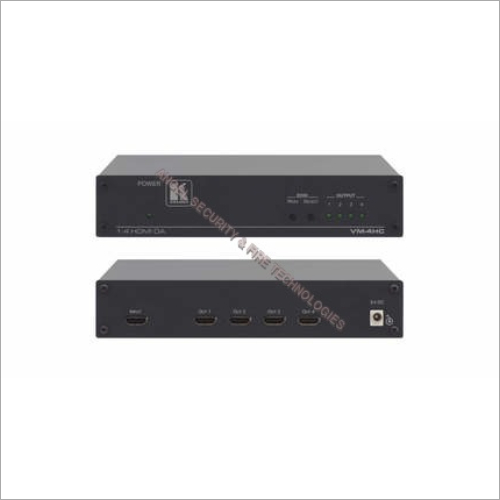
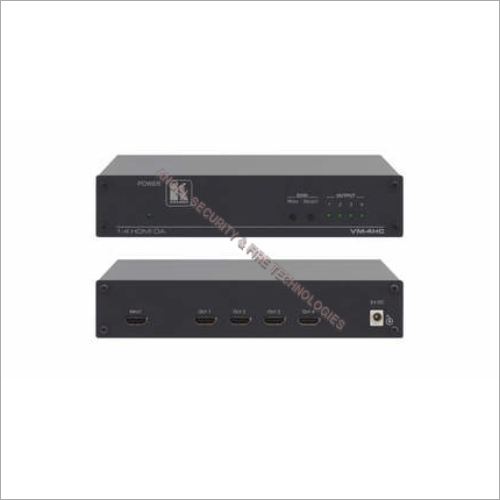
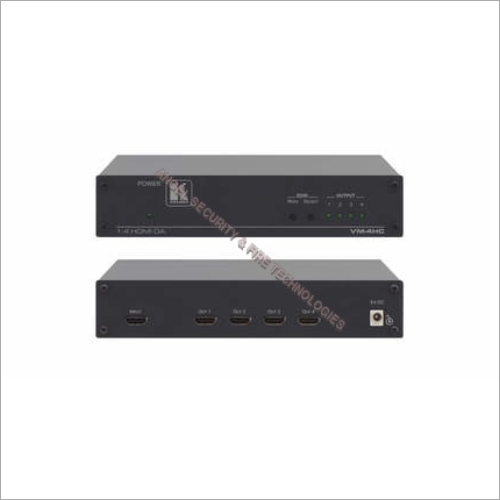
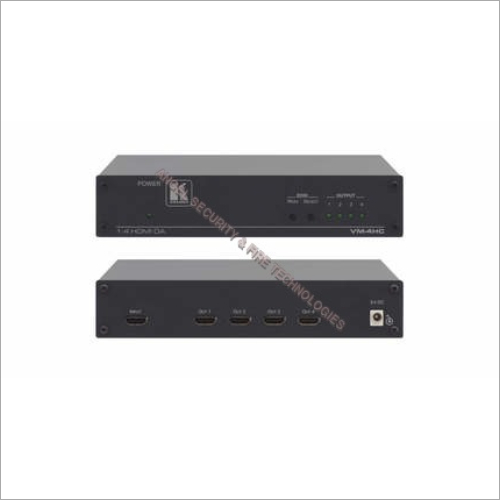
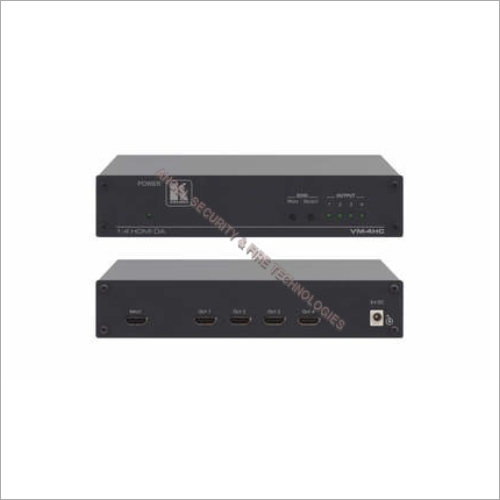
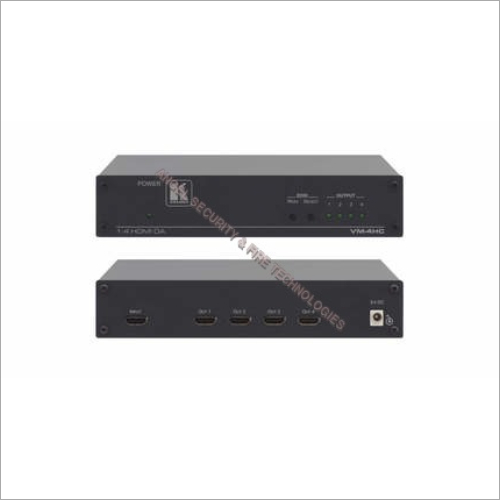
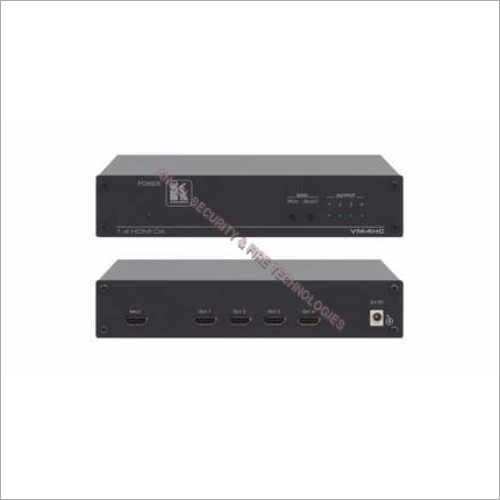
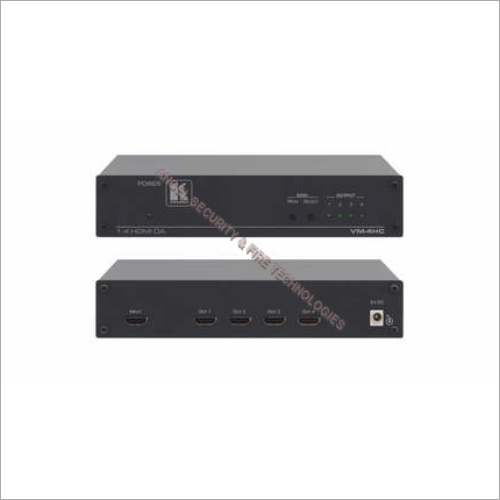
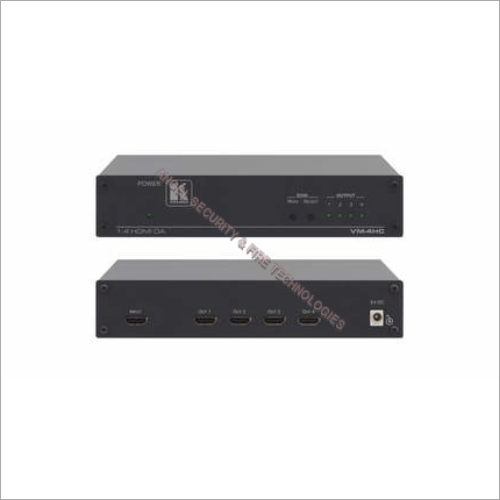
Video Distribution Amplifier
25000.0 INR/Piece
Product Details:
- Type Video Distribution Amplifier
- Material Metal Body with Electronic Components
- Use Signal Distribution for CCTV, Broadcast, or AV Systems
- Screen No
- Caller ID No
- DND Feature No
- Support Multiple Video Output
- Click to View more
X
Video Distribution Amplifier Price And Quantity
- 25000.0 INR/Piece
- 1 Piece
Video Distribution Amplifier Product Specifications
- AC 220V/110V, 50/60Hz
- No
- Black
- No
- Push or Toggle (Power Switch)
- BNC Female Connectors (Input & Output)
- Multiple Video Output
- No
- Video Distribution Amplifier
- No
- Approx. 1.5 kg
- Metal Body with Electronic Components
- Signal Distribution for CCTV, Broadcast, or AV Systems
- 10 Hz to 10 MHz
- 75 Ohms
- Desktop or Rack-mountable
- 1 Input, 4 Outputs
- Analog Composite Video
- Adjustable Output Gain Per Channel
- 0C to 50C
- Approx. 200 x 120 x 45 mm
- Power ON Indicator
- 75 Ohms
Video Distribution Amplifier Trade Information
- 7 Days
- All India
Product Description
When a video signal needs to be sent to several displays, monitors, recorders, or other equipment, simply splitting the signal with passive connectors can cause signal loss and degradation. A Video Distribution Amplifier amplifies and distributes the signal so that each output receives a clean, properly buffered copy of the original video.
Main Functions
- Signal Distribution: Sends one video input to multiple outputs.
- Signal Amplification: Compensates for losses caused by cable length and multiple connections.
- Signal Isolation: Prevents connected devices from affecting each other.
- Quality Preservation: Maintains video resolution, color accuracy, and synchronization.
Applications
- Television broadcasting studios
- CCTV surveillance systems
- Conference rooms and auditoriums
- Digital signage systems
- Video production and editing facilities
Example
A 18 Video Distribution Amplifier takes one video input and provides eight identical video outputs, allowing the same video to be displayed on eight monitors simultaneously without loss of quality.
Advantages
- Eliminates signal degradation
- Supports long cable runs
- Provides reliable video distribution
- Improves overall system performance
Versatile Signal Distribution
The amplifier is specifically designed to simplify video distribution across multiple systems. Its capability to replicate and distribute one analog composite video signal to four outputs makes it indispensable for security monitoring centers, broadcast studios, and AV presentation venues. This versatility ensures seamless signal routing without quality degradation.
Customizable Performance for Every Channel
With independently adjustable output gain for each channel, users gain precise control over signal strength based on cable lengths or specific destination requirements. The adjustable gain feature preserves image clarity and consistency, even in complex or extensive installations, making maintenance and troubleshooting more straightforward.
Robust and User-Friendly Design
Built with a metal body and reliable electronics, the amplifier endures demanding operational conditions. It features push or toggle-type power switching, clear LED indicators, and standard BNC interfaces for ease of connectivity. The compact size and flexible mounting options-desktop or rack-cater to diverse installation scenarios.
FAQ's of Video Distribution Amplifier:
Q: How do I connect and operate the Video Distribution Amplifier?
A: To use the amplifier, connect your analog composite video source to the BNC input and up to four display or recorder devices to the BNC outputs. Switch the power on using the push or toggle button. Adjust gain for each output channel as needed to maintain consistent video quality.Q: What applications is this device best suited for?
A: This amplifier is ideal for environments requiring simultaneous video feeds, such as CCTV monitoring, broadcast studios, and AV systems. Its ability to distribute a single video signal to multiple outputs makes it valuable for both commercial and professional uses.Q: When should the output gain be adjusted?
A: You should adjust the output gain for each channel when signals travel over long cables or when output devices have varying input sensitivities. Proper adjustment ensures optimal image quality and prevents signal degradation or overload.Q: Where can the amplifier be installed?
A: The unit's versatile design allows it to be mounted on a desktop or installed in a standard equipment rack, making it suitable for control rooms, studios, or AV equipment closets.Q: What benefits does the amplifier offer over passive splitters?
A: Unlike passive splitters, this amplifier prevents video signal loss and ensures each output maintains strong, clear transmission by boosting and adjusting signal strength individually, resulting in more reliable performance across all outputs.Q: Is the amplifier compatible with all video devices?
A: The device supports analog composite video formats through BNC connectors and 75-ohm impedance. It is compatible with most standard CCTV cameras, monitors, recorders, and broadcasting equipment using similar interfaces.Tell us about your requirement

Price:
Quantity
Select Unit
- 50
- 100
- 200
- 250
- 500
- 1000+
Additional detail
Mobile number
Email

Other Products in 'Video Door Phone' category




Operating Countrywide
Delhi, Mumbai, Calcutta, Bangalore, Chennai, Hyderabad, Secundrabad, Pune, Nagpur, Goa, Bhopal, Indore, Gwalior, Chattisgarh, Chandigarh, Shimla, Assam, J&K, Rohtak, Jaipur, Bikaner, Modhpur, Noida, Lucknow, Patna, Jharkhand, Bhubaneshar and Agra.
 Send Inquiry
Our Products


LB 15 A /4, Ansal Bhawan, KG Marg, Connaught Place,New Delhi - 110001, India

Mr Anil Kumar
(Head Sales)
Mobile :08045802007
 Send Inquiry
 Send SMS
Developed and Managed by Infocom Network Private Limited.


 English
 Spanish
 French
 German
 Italian
 Chinese (Simplified)
 Japanese
 Korean
 Arabic
 Portuguese